
Bonus Game costs 30×; Ultra costs 75×
The original Coin Volcano client offers two feature purchases: Bonus Game for 30 times the total bet, and Ultra Bonus Game for 75 times. These are charges for entering a feature. They are not the amounts you receive. The eventual return still depends on the symbols and feature events.
At a base bet of 1 unit, the purchase choices cost 30 and 75 units. At 2 units, they cost 60 and 150. The underlying feature remains tied to the selected base bet, which is why the purchase multiplier and a displayed win multiplier must be read together. A 40× return is above one purchase price and below the other.
Availability is configuration-dependent. Seeing both prices in a public demo response and its rules does not establish that a particular operator offers both choices to South African customers. The purchase button, confirmation screen and local conditions in the session you open control what is available there.
The useful comparison is therefore full charge, feature return and net result. Our calculator accepts each separately. It does not estimate the chance of a profitable feature because we do not have a verified outcome distribution or a completed sample from this public session.
| Illustrative base bet | Bonus Game: 30× | Ultra: 75× |
|---|---|---|
| R0.50 | R15 | R37.50 |
| R1 | R30 | R75 |
| R2 | R60 | R150 |
| R5 | R150 | R375 |
The rand amounts in the table are worked arithmetic, not a verified ZAR stake menu. For example, the R2 row shows the entire immediate purchase charge. There is no extra R2 added in this illustration. Always read the actual confirmation total if your operator presents a different purchase flow.
Natural entry and purchased entry are not identical
A naturally triggered feature begins after any three symbols occupy the main game’s middle row. The original rules allow either Bonus Game or Ultra to be selected by that trigger. A direct purchase instead charges the feature price and starts the purchased mode. It skips waiting for a natural trigger, but it does not buy a known outcome.
This difference matters for Sticky Coins. In ordinary play, a Sticky Coin may remain until a feature starts. The rules for the shop explicitly exclude existing Sticky Coins from the purchased feature. A player who sees retained values on the main board should not add them to a purchase’s expected starting value.
Changing the bet also removes current Sticky Coins when a spin is played at the different amount. That closes off a tempting but unsupported idea: gather visible retained values cheaply, raise the stake and treat them as already banked at the new amount. The rule does not support that sequence.
For a clean comparison, write down the route of entry as well as the mode name. “Bonus Game” alone omits whether the cost was one triggering spin after previous attempts or a 30× purchase. Those histories can produce different session costs even if the feature’s final return looks similar.
Suppose twenty base spins at 1 unit return nothing, followed by one triggering spin whose feature returns 25. The session cost is 21 and net is +4. A direct 30-unit purchase returning 25 instead nets −5. Both examples are hypothetical. They explain why screenshots without spending history cannot establish which route was profitable.
Build the return in the correct order
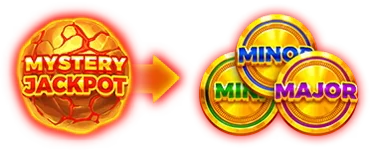
The feature board has nine positions. Coins and special symbols remain during the respins. Standard Coins are described as 1× to 4× the total bet; Sticky Coins as 5× to 9×. Mini, Minor and Major add another set of stake-based values. Read the actual symbol and its displayed amount rather than assuming every gold disc pays the same.
The original jackpot scale is Mini 10×, Minor 20×, Major 50× and Grand 500×. Grand has a different trigger: occupying all nine positions awards it in addition to the feature total. A Mystery Jackpot resolves into Mini, Minor or Major, so it is not a shortcut to Grand.
Mystery symbols remain unresolved until the final reveals. General Mystery can transform into any other permitted symbol except Sticky Coin. Mystery Jackpot has its restricted jackpot set. The reveals happen one at a time, which is why the total can keep moving after the respin counter has stopped.
Volcano Multipliers affect positions. When several lava multipliers hit one position, the multiplier value there increases. Avoid treating the number of lava hits as the payout multiplier itself. “Three hits” describes events; “3×” describes an amount multiplier. They are different units.
Coin Collect gathers coin and jackpot prizes immediately, taking relevant existing multipliers into account before collection. It then sticks. To explain a particular recorded board accurately, you would need the values before collection, the applied multipliers, the collect result and the final settlement. We have not invented that chain from promotional art.
An illustrative sum makes the distinction clearer. With base bet R1, a 4× coin represents R4. If its relevant cell multiplier is 3×, that contribution is R12. A separate Mini at 10× represents R10 before any applicable cell multiplier. These calculations identify contributions; the game’s full settlement remains the authoritative total.
What the extra 45× buys in Ultra
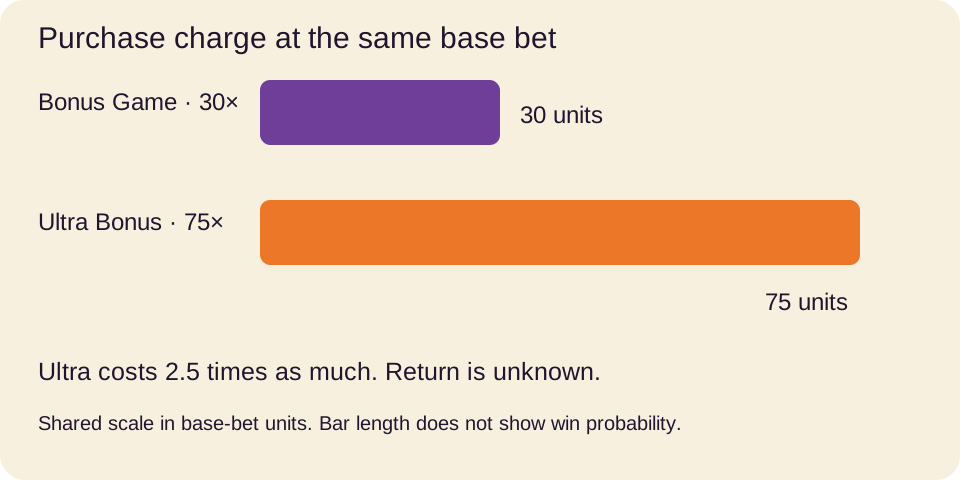
Ultra costs 45 base-bet units more than the ordinary purchase. At a base of R1, that is a difference of R45; at R2, R90. Its stated mechanical advantage is a guaranteed Volcano Multipliers feature at the beginning and a higher chance of that feature occurring again during the bonus.
The rules do not supply the size of that probability increase. We cannot turn “higher chance” into a percentage, calculate a fair price for it or claim that Ultra has the better expected value from that wording alone. Nor can a guaranteed opening event establish a guaranteed final return above the 75× purchase price.
Consider two purchases with the same hypothetical return of 60×. At 30× cost, net is +30×. At 75× cost, net is −15×. Ultra would need a higher actual return in that example just to reach the same net outcome. This does not prove ordinary Bonus is statistically superior; it shows the arithmetic that a comparison must include.
You may prefer one feature’s presentation or pace. That is a preference, not evidence of profitability. A faster route to a multiplier event can also spend the same session budget in fewer actions. Before comparing exciting feature clips, normalise them to the full money committed and include losing examples.
The RTP and strategy page explains why a collection of selected wins cannot answer this question. You need a defined sample and the relevant cost for every paid start. A single exceptional Ultra return can dominate a short sample without making the next purchase predictable.
When a feature ends, and why the last cell matters
Ordinary Bonus Game starts with three respins. A new bonus symbol resets the available count to three. The sequence continues until no attempts remain or all nine board positions are occupied. Counting animations as separate paid spins exaggerates the number of independent bets in a session.
A feature with eight filled positions can be visually tense because the ninth completes the board and adds Grand. That proximity is a board condition, not a published probability. We have not measured the chance of completing the final position and cannot say it is “due” after a series of misses.
Keep a distinction between completion and collection. Coin Collect may act during the feature, while Mystery values and final multipliers may still await resolution. The final balance and completed-round record are better accounting points than an intermediate collect animation.
The rule that Grand adds 500× also means a Grand banner should not be used as the game’s complete maximum-win specification. Other awards can be part of the same total. We have left unverified overall maximum figures out of the facts panel rather than confusing a component award with the complete cap.
For a manual note, use one row per paid action. Record the base bet, purchase charge or ordinary stake, entry mode, final return and net. Child respins can have their own detail rows, but their returns must not be counted twice in the paid-action total.
Translate a jackpot label into the selected stake
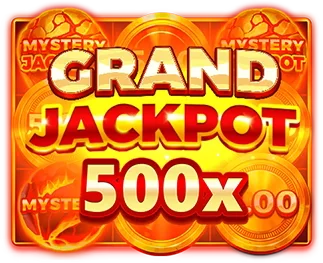
Jackpot labels can be checked with simple multiplication before a feature starts. At a hypothetical R0.50 base, Mini’s 10× is R5, Minor’s 20× is R10, Major’s 50× is R25 and Grand’s 500× is R250. Doubling the base to R1 doubles each of those amounts. It also doubles both purchase prices.
That last sentence matters when comparing screenshots. A Major showing 50 in one session and 100 in another may reflect different base bets, not different luck or a stronger game version. Without the selected stake, the nominal jackpot number is incomplete information. Keep the stake visible when documenting a feature.
Now compare a Major component with a purchase. At R1, the 50-unit Major exceeds the 30-unit ordinary purchase price, but is below the 75-unit Ultra price. The entire feature may include additional values or multipliers. A single symbol’s value is therefore not enough to classify the completed purchase as a win or loss.
A full-board Grand adds 500 base-bet units to the feature total under the original rule. Grand is a fixed stake-based award, not a shared prize pool. The screen can show a large currency amount simply because the selected stake is large. The corresponding cost and possible loss scale with it.
For Mystery Jackpot, write “unknown Mini/Minor/Major” until it opens. Do not enter 50× in your running total merely because Major is one permitted reveal. Assigning the best possible value before the reveal is an accounting error. The same care applies to a Mystery that has not yet resolved into its final symbol.
Use the table as a reading exercise, then check the actual game configuration. These rand examples neither establish a ZAR stake option nor verify that the game is available locally. Their purpose is to make the relationship between a label, a base bet and a full purchase cost explicit.
| Original award | At R0.50 base | At R1 base |
|---|---|---|
| Mini · 10× | R5 | R10 |
| Minor · 20× | R10 | R20 |
| Major · 50× | R25 | R50 |
| Grand · 500× | R250 | R500 |
Three comparisons worth making before buying
First compare the purchase with your total session budget. A hypothetical R150 Ultra purchase consumes half a R300 budget. Calling its base “only R2” hides most of that commitment. If losing the full purchase would break your budget, the smaller base number does not make the action suitable.
Second compare the return with the full charge. A R90 return after a R60 purchase gives +R30 net. The same R90 return after a R150 purchase gives −R60. Keep the plus or minus sign visible in your notes. The calculator colours net profit green and net loss red, while leaving stake and returned amounts neutral.
Third compare like with like across several actions. Ten R1 ordinary spins cost R10 before returns. Ten R30 purchases cost R300. Equal numbers of actions are not equal exposure. If you compare modes, use the same spending ceiling and report what happened when that ceiling was reached.
A stopping rule controls further spending; it does not alter the feature that has already been purchased. If a feature is open when your time limit arrives, let it settle or use the operator’s documented recovery process. Do not record a half-finished feature as a final zero or a final win.
None of these calculations requires an account, a deposit or a downloadable tool. Our examples are editable arithmetic. When you choose to visit a partner service, verify the exact title, the offered features, your eligibility and the full charge in that session. We have not confirmed this game in the partner lobby.
If your question is about a promotional bonus code, that belongs to the operator’s account offer, not Coin Volcano’s internal Bonus Game. A 30× feature price is not a wagering requirement or a welcome offer. The account and offer explanation separates these meanings so you can read the relevant terms.