
Coin Volcano in one complete round
Coin Volcano uses a 3×3 grid, but only the middle row triggers the feature from the main game. Any three symbols across that row activate Bonus Game or Ultra Bonus Game. The main game has no ordinary paying symbols. A coin shown outside a completed feature is therefore not money you can already collect.
Choose a total bet, start one spin and check whether the middle row has filled. Without a trigger, that paid spin ends. With a trigger, the game moves into a sequence of respins at the triggering bet. The symbols that land during that sequence build the feature return. Wait for the feature to finish before comparing the returned amount with the amount spent.
The original game is supplied through 3 Oaks Gaming. Its current public client also displays KENDOO branding. That relationship is more useful for identification than the word “volcano” alone. Coin Volcano 2, 3 Coin Volcanoes and unrelated phone apps are not interchangeable editions of this 3×3 game. Their screenshots and rules can describe different products.
In our 4 November 2026 check, the public client reached the main controls with a virtual balance of 1,000 and a selected bet of 1.00. The session subsequently closed before a completed spin was recorded. The screenshots below document the controls; they are not a winning-session report. The mechanical explanations come from the rules delivered by that client.
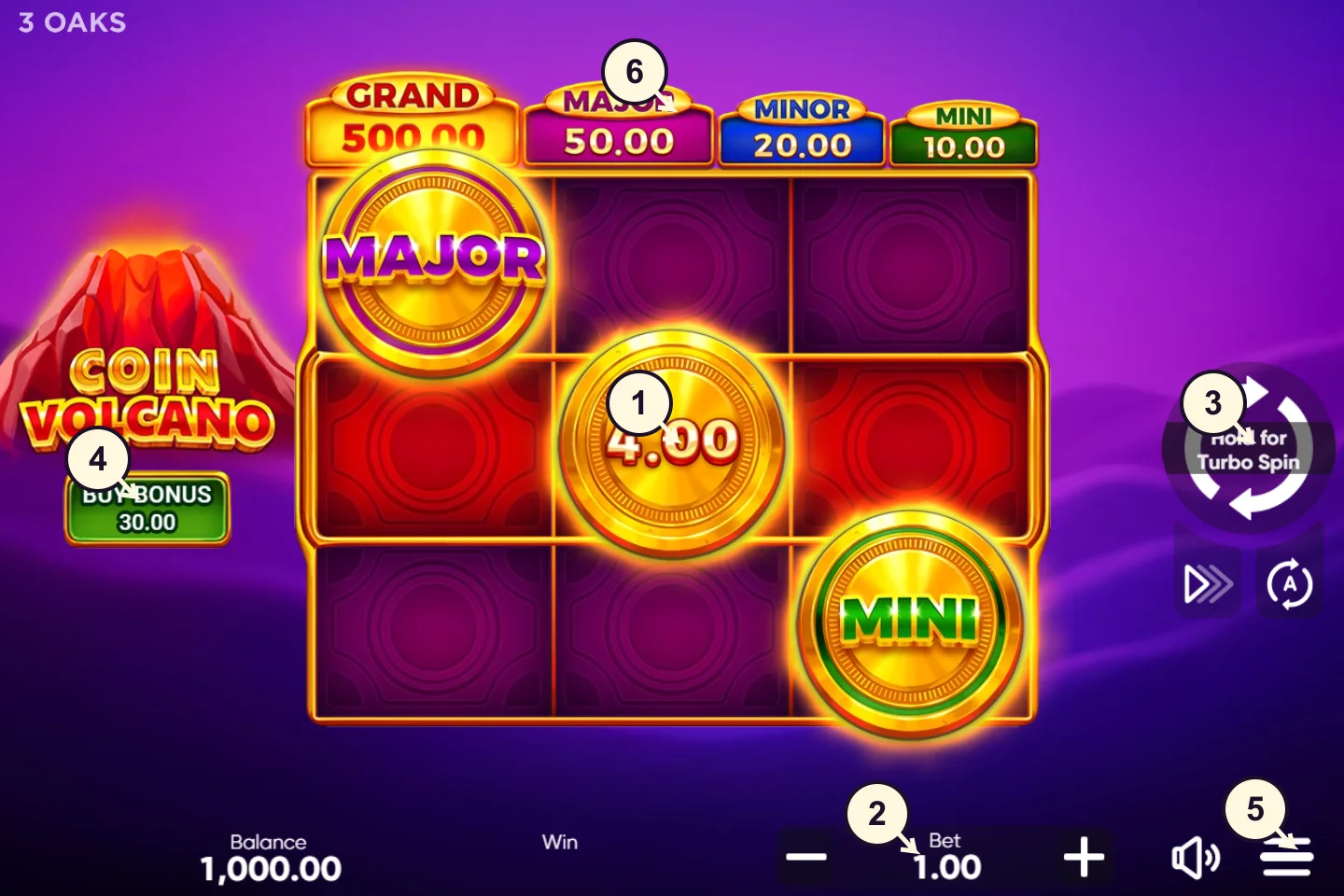
Read the six controls before pressing Spin
Number 1 marks the grid. Read it in two stages: the middle-row trigger in the main game, then the full board during the feature. A large coin animation can cover more than one cell visually. Judge its final position after it settles rather than counting every square covered by the moving artwork.
Number 2 is the bet selector at the bottom. The minus and plus controls change the amount attached to the next paid action. The jackpot values above the board scale with that bet. Read the whole number and its unit; a display of 1.00 does not establish that the currency is rand. Our launch used FUN, a virtual demo currency.
Number 3 is the large circular Spin button. The delivered rules also describe Enter or Space for starting a spin and holding Space for turbo. Faster presentation does not turn a spin into a cheaper action. Avoid holding a key while trying to inspect the grid, especially before understanding how repeated input behaves.
Number 4 opens Buy Bonus. It leads to a purchase choice, not a free help screen. The original configuration offers Bonus Game at 30× the total bet and Ultra Bonus Game at 75×. Confirm the full charge before accepting. At a hypothetical R2 base bet, those charges would be R60 and R150. Those rand examples are arithmetic, not a verified rand launch.
Number 5 is the menu. Use the game’s own rules and settings to check the active configuration. Number 6 identifies the jackpot panel. Mini, Minor, Major and Grand are amounts tied to the total bet, not a shared prize pool that must be growing between your visits. The supplied rule set defines their multiples explicitly.
Balance and Win are separate displays. The balance is what remains available in that session. A win display describes a return, which may include less than the amount just charged. A prominent animation is not a reliable profit indicator. The full-cost calculator lets you compare the two amounts without mental arithmetic.
The middle-row trigger and Sticky Coins
A trigger requires three symbols across the middle row of the original game. It is not a conventional match-three payline where three identical pictures earn a line award. The rule says any three symbols. Their role is to open the feature, where the eventual symbol values and special actions matter.
Sticky Coins can appear randomly during the main game. They remain on the reels until Bonus Game or Ultra Bonus Game starts, subject to the bet-change rule. Their displayed values range from 5× to 9× the total bet. Ordinary Coins in the bonus have a different stated range, 1× to 4×. Colour and position therefore deserve attention before you assume all coins are equivalent.
There are two important limits to the sticky behaviour. Playing a spin at another bet removes the current Sticky Coins. Buying a feature also excludes the current Sticky Coins from that purchased feature. You cannot build a set at a small stake and assume it will transfer intact into a larger purchase.
The rules explicitly say that sticky features on the middle row do not increase the chance of triggering a featured round. The visual impression of being “almost there” is therefore not evidence of a higher chance on the next spin. A retained value and an increased trigger probability are different claims.
A practical check is to note the selected bet before a sticky symbol appears, then read the rules before changing it. If you decide to stop, a visible retained coin is not a reason to keep spending. It has no separately withdrawable value on this screen. The feature must occur and settle under the game’s rules.
Some older descriptions mention a filling volcano meter. We have not treated that as a verified control in the current captured layout. Use the rules and visible controls in your actual session, rather than assuming every description of an earlier build applies unchanged.
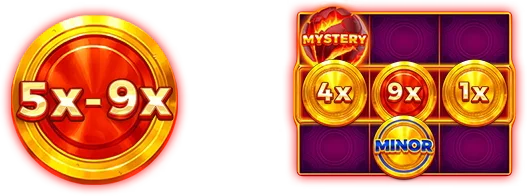
Three respins, nine positions and a clear ending
Bonus Game begins with three respins. Each new bonus symbol resets the remaining count to three. If no new symbol lands, the available attempts are used up. The feature ends when those attempts run out or all nine positions are occupied. This is why a feature can contain more than three animations without representing several separately purchased rounds.
For a simple teaching example, start with three attempts. An empty respin leaves two. Another empty respin leaves one. A new qualifying symbol on the next attempt resets the count to three. That reset extends the existing feature; it does not mean you bought another feature or received three withdrawable credits.
All bonus symbols stick during the feature. As the board fills, fewer empty positions remain. This changes the visible shape of the sequence, but it does not supply the probability of landing the final missing symbol. We have no verified odds table for each remaining-board state. Do not infer a certainty from eight occupied positions.
The game carries the triggering total bet into the feature. If a feature triggered at 1 unit, its stake-based values are interpreted at that unit. A purchase price is another matter: buying a 30× feature at a base of 1 costs 30. Use that full charge when deciding whether its final return was profitable.
When the board is full, the Grand award is added to the feature’s total return. The original rule states 500× the total bet. That does not mean 500× is the complete maximum return of every feature: the Grand is an addition to other feature awards. Equally, a promotional maximum from a different edition should not be applied here.
Wait until the feature shows its completed result before recording it. Mystery reveals and multiplier calculations can still change the displayed total near the end. A screenshot taken halfway through the feature is useful for explaining a symbol, but not for calculating the final return of the paid action.
Coins, Mystery and Coin Collect do different jobs
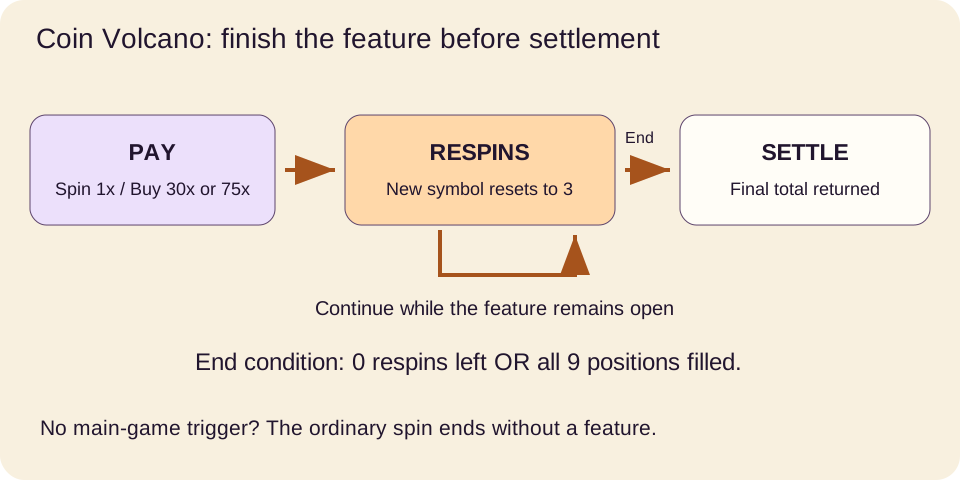
A standard Coin supplies a stake-based value. Mini, Minor and Major symbols supply their corresponding jackpot awards. A Mystery symbol is unresolved information: it turns into another permitted symbol at the end. It does not automatically mean the largest prize. The original rules exclude Sticky Coin from its possible transformations.
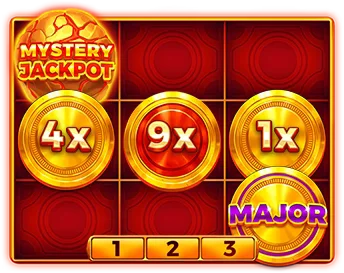
Mystery Jackpot is narrower than general Mystery. It resolves into Mini, Minor or Major. Grand is obtained by completing the board, rather than by assuming the Mystery Jackpot symbol can reveal any of the four names. This distinction is easy to miss when a small phone screen compresses the feature artwork.
The two Mystery types open one by one at the end of Bonus Game or Ultra Bonus Game. Until they open, a precise final sum may be unavailable. For an honest record, keep the intermediate screenshot and the final result separately. Do not replace an unknown value with the biggest permitted outcome.
Coin Collect gathers the coin and jackpot prizes on the reels immediately. Existing multipliers are applied to those values before collection. The collect symbol then remains on the board until the feature ends. It is a game symbol, not a manual cashout button that lets you leave the feature early.
For example, suppose the relevant collectible values are 2, 3 and 10 units, with no multiplier affecting them. Their sum is 15 units. If the 2-unit value is multiplied by 3 before collection, that contribution becomes 6 and the sum becomes 19. This is an arithmetic illustration of the order, not a claim that we recorded that board.
A useful reading order is value, multiplier, special action, final total. It prevents two common mistakes: adding an unmodified coin after it has been multiplied, and treating a Coin Collect animation as a separate cash withdrawal. The bonus guide explains the interactions in more detail.
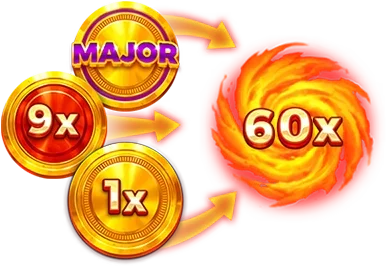
Volcano multipliers and the Ultra difference
Volcano Multipliers can activate randomly during either Bonus Game or Ultra Bonus Game. The volcano sends between one and nine lava multipliers to reel positions. More than one can land on the same position, increasing that cell’s multiplier value. The rules describe the feature’s application at settlement and its interaction with collection.
Ultra guarantees a Volcano Multipliers event at the beginning. It also states a higher chance of retriggering that event during Ultra. Neither statement gives us a numerical probability, and neither guarantees a profit. An added feature can increase the possible return while its purchase price also increases the amount at risk.
At the same base bet, the displayed Ultra purchase costs 2.5 times the ordinary purchase: 75 divided by 30. A 50-unit return would exceed a 30-unit purchase by 20 units, but fall short of a 75-unit purchase by 25. The same win banner can therefore correspond to opposite net outcomes.
Keep the guarantee precise. Ultra guarantees the opening multiplier feature, not a particular cell, a specific multiplier, a full board or a minimum profitable return. If you see a statement promising a certain withdrawal from Ultra, compare it with the actual game rule rather than the excitement of the animation.
You do not need to buy a feature to understand it. Read the illustrated rules, work through the calculator and use the public demo when it is functioning in your location. Our current launch has been unreliable, so the demo page makes that limitation visible before opening the provider’s frame.
Practise reading a board without placing a bet
Start with a blank drawing of three rows and three columns. Mark the middle row. Put one symbol in its left position and another in its right position, leaving the centre empty. That drawing does not meet the three-symbol trigger condition. Now put a third symbol in the centre: the middle row is complete. The exercise teaches the trigger without pretending to generate game outcomes.
Next place three symbols in a diagonal instead. There are still three symbols on the board, but they do not occupy all three positions of the middle row. The total number visible is not the only condition. Position matters. This is the mistake a newcomer can make when looking at a busy screenshot with oversized coin graphics.
For the feature-counter exercise, write down 3, then cross it out and write 2 after a hypothetical empty respin. Another empty attempt leaves 1. A new bonus symbol on the next attempt restores the count to 3. Continue with three hypothetical empty attempts: 2, 1, 0. The sequence ends because the counter is empty, although the board need not be full.
Keep this example separate from the game’s probability model. We deliberately chose each event to demonstrate a rule. The chosen sequence is not a record, a random sample or evidence of how often a reset occurs. It cannot be used to estimate RTP or to say a new symbol is likely when only one attempt remains.
Finally put nine permitted symbols on the feature drawing. This demonstrates the other completion condition: a full board. In the original rules, that condition adds Grand at 500 times the triggering bet. With a hypothetical R0.50 triggering bet, the Grand component would be R250. With R2, it would be R1,000. Those are scaled awards, not advertised local jackpots.
The exercise also shows why visual size is a poor measure of value. A large animation may represent a small coin, while a compact jackpot label can stand for many base-bet units. Read the number, its unit and the rule attached to the symbol. Do not substitute the brightness of an effect for the amount it contributes.
Once you can explain the trigger, the counter and the full-board ending in your own words, the remaining difficulty is tracking special symbols and costs. Return to Mystery and Coin Collect if a final total seems surprising. If you are unsure whether a number is already paid, use the completed balance rather than the animation.
A worked balance check and sensible stopping point
Assume a hypothetical starting balance of R200 and a base bet of R2. Five unsuccessful ordinary spins cost R10, leaving R190. A sixth R2 spin triggers a feature that returns R24. After its full settlement, the balance is R212: R200 minus R12 in paid spins plus R24 returned.
The feature returned twelve times that R2 triggering bet, but the session profit was R12, not R24. Earlier paid attempts still belong in the session calculation. If you only save the feature screenshot, you lose the spending that led up to it. The difference becomes much larger when many attempts precede a trigger.
Now compare a direct purchase at the same base bet. Bonus Game costs R60. If it returns the same R24, the purchase loses R36. It does not become a successful purchase merely because twelve times the base bet appeared in the win display. A positive return and a positive net result are not synonyms.
Use the amount you can afford to lose as the session ceiling before starting. Include purchases in that ceiling at their full prices. At R2, a single Ultra purchase consumes R150, which is three quarters of a R200 starting balance. Ten low-cost test spins and one feature purchase are not comparable spending plans.
For South African readers, the rand figures here explain scale only. The captured public client used FUN credits. It did not verify a local payment method, a South African operator account or a licensed offering of this exact title. Check those details on the actual service before making a commercial decision.
If the game disconnects, stop repeated input and check the operator’s round history or support route. A vanished animation does not prove the stake was refunded. Our session closed before a completed paid round, so we have no tested recovery result to promise. Keep a timestamp, the selected bet and the displayed balance for a useful support report.
The next useful step depends on your question. Use the app and version guide if you are unsure what you opened. Use RTP and strategy explained if you want to assess claims about patterns. Use the partner lobby only after checking the exact game and local eligibility.